


The tariff conversation that started in 2025 and accelerated through 2026 has done something the furniture industry did not expect: it forced consumers to think carefully about what they are actually buying.
For the better part of two decades, the furniture market operated on a simple premise. Find a piece that looks acceptable, fits your budget, and the details of how it was made were an afterthought. Origin labels were background information, not a purchase driver.
That assumption is coming apart. And what is replacing it is a more honest conversation about quality, longevity, and what furniture actually costs when you account for how long it lasts.
The answer, it turns out, has less to do with where furniture is made and everything to do with how.
What Tariffs Actually Revealed
The tariff discussion made something visible that the industry had quietly accepted for years: the lowest-priced furniture in the market was priced that way because of how it was built, not just where.
Mass-produced furniture, whether assembled in Mississippi or manufactured in Guangdong, shares the same cost-reduction playbook. Engineered wood instead of solid hardwood. Cam locks and dowels instead of cut joinery. Sprayed finishes instead of hand-applied ones. These are manufacturing decisions, not geographic ones. A stapled MDF dresser built in North Carolina is no better than a stapled MDF dresser built in Vietnam.
When tariffs raised the cost of some imported furniture, it narrowed the price gap between mass-produced pieces and handcrafted ones. Buyers who had defaulted to the cheapest option started asking a question they had not asked before: what am I actually getting for the money?
That question changes everything.
The Real Distinction: Handcrafted vs. Disposable

The furniture industry would like you to think the line runs between domestic and imported. It does not.
The line runs between furniture built to last and furniture built to sell.
On one side: pieces constructed from solid hardwood with traditional joinery, hand-carved details where the style requires it, and finishes that develop character over decades. This furniture is made by skilled craftsmen in workshops around the world, from small American shops to established ateliers in Europe and Asia. The methods are the same. The standards are the same. The results are the same.
On the other side: furniture engineered for a price point. Particle board cores with printed vinyl surfaces. Stapled frames. Finishes that chip and yellow within a few years. This furniture is also made all over the world, including domestically. The label on the box does not tell you which category you are buying.
The tariff conversation accidentally clarified this by forcing price transparency. When the cost of mass-produced imports rose, buyers could suddenly see that the gap between disposable furniture and the real thing was smaller than they had assumed.
The Maths of Longevity
If you are comparing a $1,500 mass-produced dining table to a $6,000 handcrafted one, the comparison feels clear in favour of the cheaper option.
Extend the time horizon and the maths reverses.
The $1,500 table, built to a 15-year service life, costs $100 per year. Over 100 years, you would buy approximately seven of them, spending $10,500 and dealing with the disruption, the disposal, and the environmental cost of seven replacement cycles. The $6,000 table, built to a 100-year service life, costs $60 per year. Over 100 years, you buy it once. Its per-year cost is lower. Its total cost is lower. Its environmental footprint is dramatically lower.
The only thing that makes the cheaper table look like the better value is ignoring the time dimension. And the time dimension is exactly what the tariff conversation has prompted consumers to pay attention to.
What "Handcrafted" Actually Means

The word gets used loosely. Here is what it means when applied to furniture built in the traditional way.
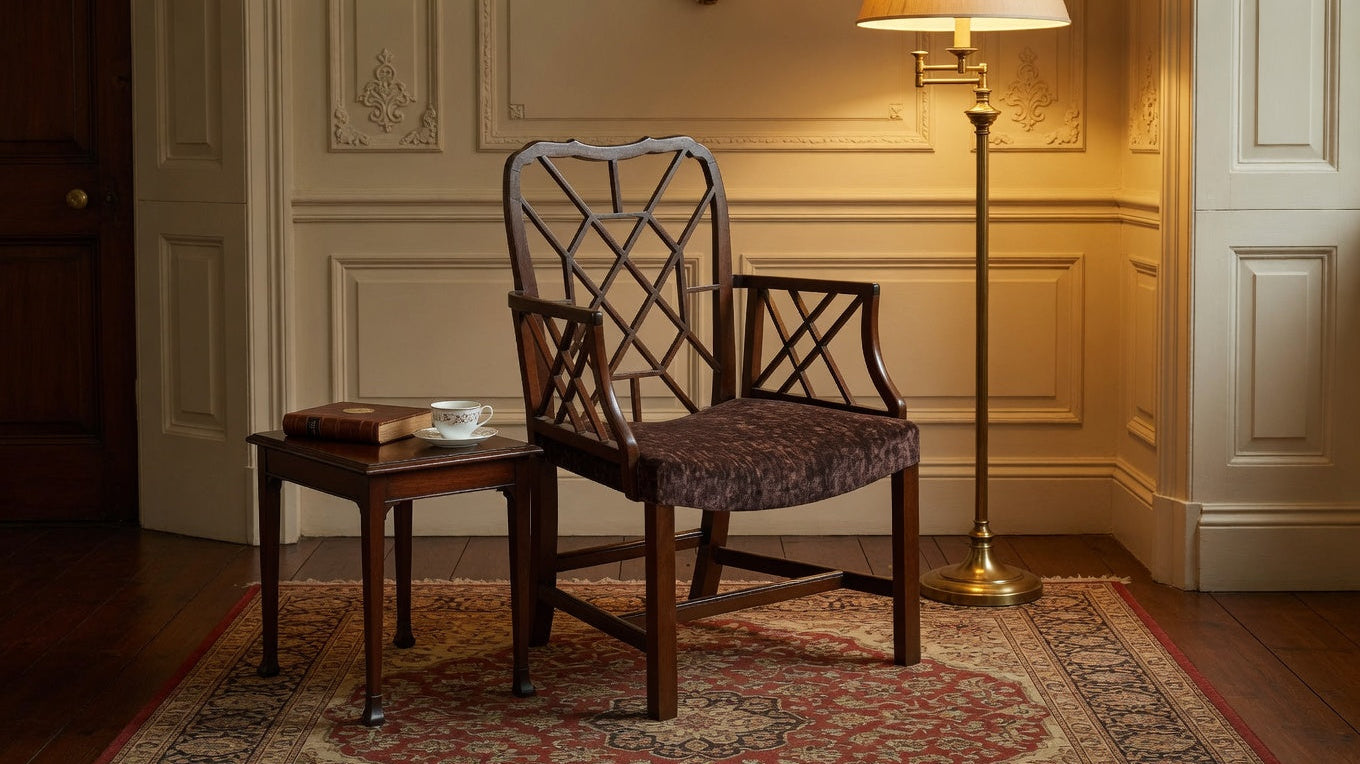
Solid wood construction. The piece is built from solid hardwood, typically mahogany, walnut, cherry, or oak, selected for grain and properly dried. Veneer over a solid wood substrate is acceptable for large flat surfaces where stability matters. Veneer over MDF or particle board is a different category of object entirely.
Traditional joinery. Dovetails on drawers. Mortise-and-tenon on frames. Hand-fitted joints that hold without relying on glue alone. These are the same methods used in 18th-century workshops, and they produce the same results: furniture that does not fail at the joints.
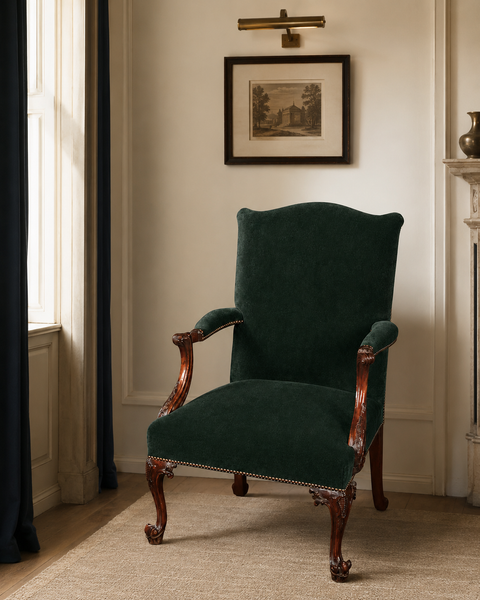
Hand carving where the style demands it. A ball-and-claw foot cannot be CNC-routed. The slight variations in each carved detail, the way the carver reads the grain and adjusts the cut, the depth decisions made in real time: these are what give hand-carved furniture its life. Master carvers in workshops from Philadelphia to Vietnam to England spend years developing this skill.
A finish that honours the wood. French polish, hand-rubbed oil, wax. Traditional finishes are transparent. You see the wood through them, not just a colour applied to a surface. They develop patina over time rather than degrading. Our French polish guide explains the technique in detail.
The Pieces Worth Getting Right
Not every furniture purchase warrants this level of scrutiny. But there are pieces where the decision to buy handcrafted changes everything about how you live with the object.
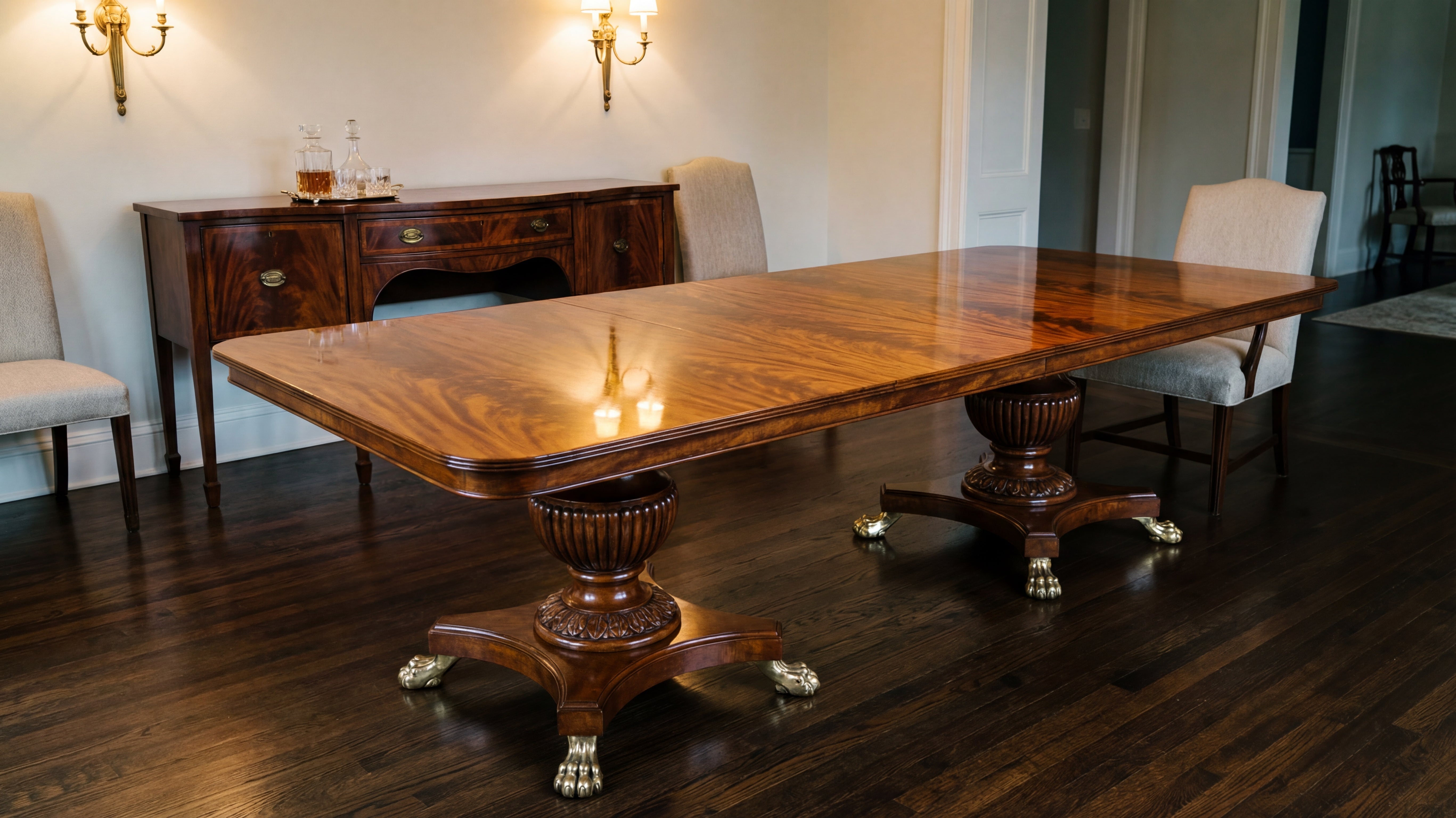
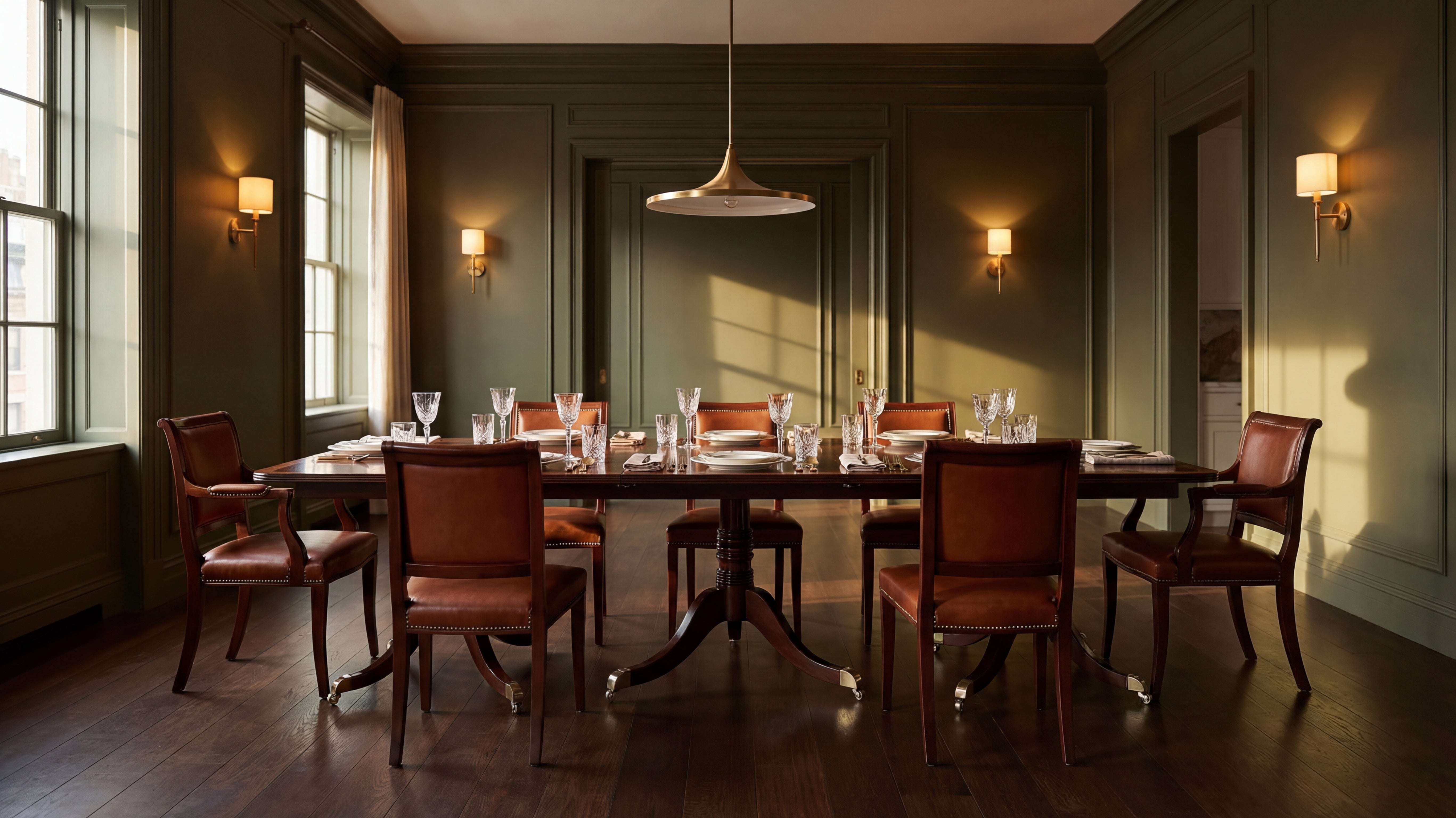
The dining table. The most-used piece of furniture in a home that has one. It hosts meals, homework, holiday gatherings, and the ordinary transactions of daily life. A dining table that survives these uses for 100 years is a fundamentally different object than one that gets replaced every 15 years. If there is one piece worth buying correctly, it is this one. See our dining table collection.
The desk. A well-built desk is a tool for the work of a life. A mahogany partners desk or library desk built in the traditional way has the mass and stability that no flat-pack alternative can replicate. It does not flex when you write. It does not wobble when you shift in your chair. It has drawers that slide without catching. It will look better in 20 years than it does when you buy it.
The case pieces. Bookcases, chests, sideboards. These carry real load and take real wear. Traditional joinery handles decades of use. Veneer over particle board delaminates at the edges and swells when the humidity changes. See our dining room collection.
The sofa frame. Most buyers do not think about sofa frames because they cannot see them. But the frame determines whether a sofa lasts 5 years or 50. A solid hardwood frame, corner-blocked and mortise-and-tenon joined, will survive decades of use and multiple reupholstering cycles. See our sofa collection.
How to Tell What You Are Actually Buying

A few practical checks that cut through the marketing:
Open a drawer. Look at the joint where the front meets the side. Dovetails should be clean and fitted. If you see staples, dowels, or a rough butt joint hidden with filler, you are looking at mass production regardless of what the brand claims.
Knock on the surfaces. Solid wood has a resonant, warm sound. MDF or particle board sounds flat and dead. The difference is unmistakable once you have heard both.
Ask about the finish. Is it hand-applied over multiple sessions, or sprayed in a booth? A sprayed lacquer finish is not inherently bad, but it is a different product than a hand-rubbed French polish or oil finish.
Look at the carving. If the piece has carved elements, examine them closely. Machine-cut carving has uniform depth and no variation. Hand carving has subtle differences in each repeated element. Those differences are the whole point.
Ask about repairability. Can the piece be repaired and refinished by a skilled restorer? Traditional furniture can. The joinery can be re-glued. The finish can be revived. A broken element can be replaced. Furniture that cannot be repaired has an expiration date built into it.
What to Do With This Information
The tariff conversation will evolve. Rates will change. Trade policies will shift. None of that matters if you are buying furniture built to outlast every trade agreement signed in your lifetime.
Buy fewer pieces. Buy the right ones. Buy them once.
The craftsmen building furniture the traditional way, in workshops around the world, have staked their careers on the proposition that quality and longevity matter more than price and convenience. The tariff moment has given buyers a reason to see what those craftsmen have always known.
At EGA HOME, we curate handcrafted furniture from the finest traditional makers. Every piece in our collection is built with the methods described in this article: solid hardwood, traditional joinery, hand-applied finishes, and the kind of care that only comes from a craftsman working to standards that have not changed in 250 years.
EGA HOME curates handcrafted reproduction furniture from the world's finest traditional makers. Our dining room collections, home office pieces, and living room furniture are available at egahome.com.
Related reading: American Furniture at 250: The Craft That Shaped How We Live | How to Choose a Dining Table That Lasts 100 Years | Reproduction Furniture vs. Antiques in 2026