


Something shifted in early 2026. Interior designers started fielding calls from clients asking a question that hadn't come up much in recent years: "Should I just buy a reproduction instead?"
The answer used to feel complicated. Now, for more buyers than ever, it isn't.
Tariffs on imported antiques, escalating auction premiums, and an antiques dealer market with thin inventory and thin guarantees have reshuffled the math. Buyers who spent years hunting auction houses and estate sales are starting to ask whether a hand-built mahogany reproduction, made to the exact dimensions they need and finished the way they want, isn't simply the better choice.
It often is. And it has been for longer than most people admit.
This isn't a post arguing that antiques are bad. Great antiques are irreplaceable. But this is a post being honest about what buyers are actually comparing right now, what real antiques actually deliver, and where reproduction furniture has quietly become the more intelligent option for a specific kind of buyer who wants quality, longevity, and genuine craftsmanship.
What Changed in 2026
The tariff situation created a pricing shock that most antiques buyers didn't see coming.
A significant portion of the antiques entering the American market originate from or transit through countries now subject to elevated import duties. Dealers absorbed some of that cost. They passed the rest on. Auction house buyers have found that the same chest-on-chest that sold in 2023 for one price now lands 15 to 25 percent higher by the time it clears customs, pays a buyer's premium, and gets shipped and installed.
The economics of antique buying were already unforgiving. You were already paying a premium for age, rarity, and the story. The tariff environment layered cost onto a market that had few natural price controls to begin with.
At the same time, reproduction quality has continued to improve. The best American and English reproduction makers today are working with the same woods, the same joinery methods, and the same finishing traditions as the original cabinetmakers. The gap between a top-tier reproduction and a documented English antique, from a pure craft standpoint, is narrower than the price gap suggests.
That combination, rising antique costs and improving reproduction quality, is behind the shift in buyer conversations.
What Antiques Actually Give You
Let's be precise about this, because antiques do offer things that reproductions cannot replicate.
Provenance and authenticity. A piece with a documented history, a maker's mark, a sale record from a notable estate, carries cultural weight that has nothing to do with the wood or the joinery. If you're buying as a collector, or if the story behind the object matters to you, a genuine period antique offers something no reproduction can provide.
Age patina. The color that develops on 200-year-old mahogany, the way the wood has moved slightly with centuries of humidity and temperature, the natural gloss built by generations of polish and handling. You cannot reproduce time. A live-finish reproduction will develop its own character over decades, but it will not arrive looking like a piece that survived the Regency period.
Investment value. A well-documented antique from a recognized period and maker retains and often appreciates in value. It is a tangible asset. A reproduction is a furniture purchase, not a financial investment.
If any of those three things are your primary reason for buying, an antique is the right answer. Full stop.

A George III inlaid mahogany sideboard. Reproduction craftsmanship now matches the material quality and design precision of period originals.
What Antiques Actually Don't Give You
Here is where buyers have been getting sentimental in ways that cost them.
Guaranteed structural integrity. The age that creates patina also means 200 years of potential repairs, bad restorations, replaced components, worm damage, and hidden stress fractures. Buying an antique without an expert inspection is buying a story, not a piece of furniture. Many buyers have paid antique prices for furniture that needed immediate remediation. The dealer who sold it knew. You found out later.
Custom dimensions. A 19th-century Hepplewhite sideboard is the size it is. If your dining room needs 72 inches and the piece is 60, you have a problem no amount of enthusiasm resolves. Antique buyers routinely compromise on fit because they fell in love with a piece that simply does not work in their space.
Known construction. The best antique dealers will tell you the truth about a piece. Not all of them will. Veneer lifted and re-glued, backboards replaced, legs from a different piece married to a case that needed them. The antique market is full of frankenstein furniture that looks right and isn't.
Color and finish control. You take the finish as it is. Some pieces are over-stripped and too bright. Some have been refinished badly. Some have a surface treatment applied in the 1970s that looks nothing like the original French polish. The piece you're buying and the piece in the auction photograph can arrive at your door looking different.
Repeatability. If you want four matching chairs and a matching dining table, you are betting on the antiques market to deliver things that may have been separated by auction sales a century ago. Matched sets of quality antiques exist, but finding them takes years and costs significantly more than individual pieces.
What Reproduction Furniture Actually Gives You
A well-made reproduction from a serious craftsman gives you everything a quality antique gives you, except age and provenance, plus several things an antique cannot.
New wood. This sounds simple. It is actually significant. New wood means no hidden repairs, no previous damage, no structural compromise from age. A solid mahogany reproduction built today from properly dried lumber will be in exactly the condition you receive it in for the next hundred years if you treat it right. There is no inherited damage.
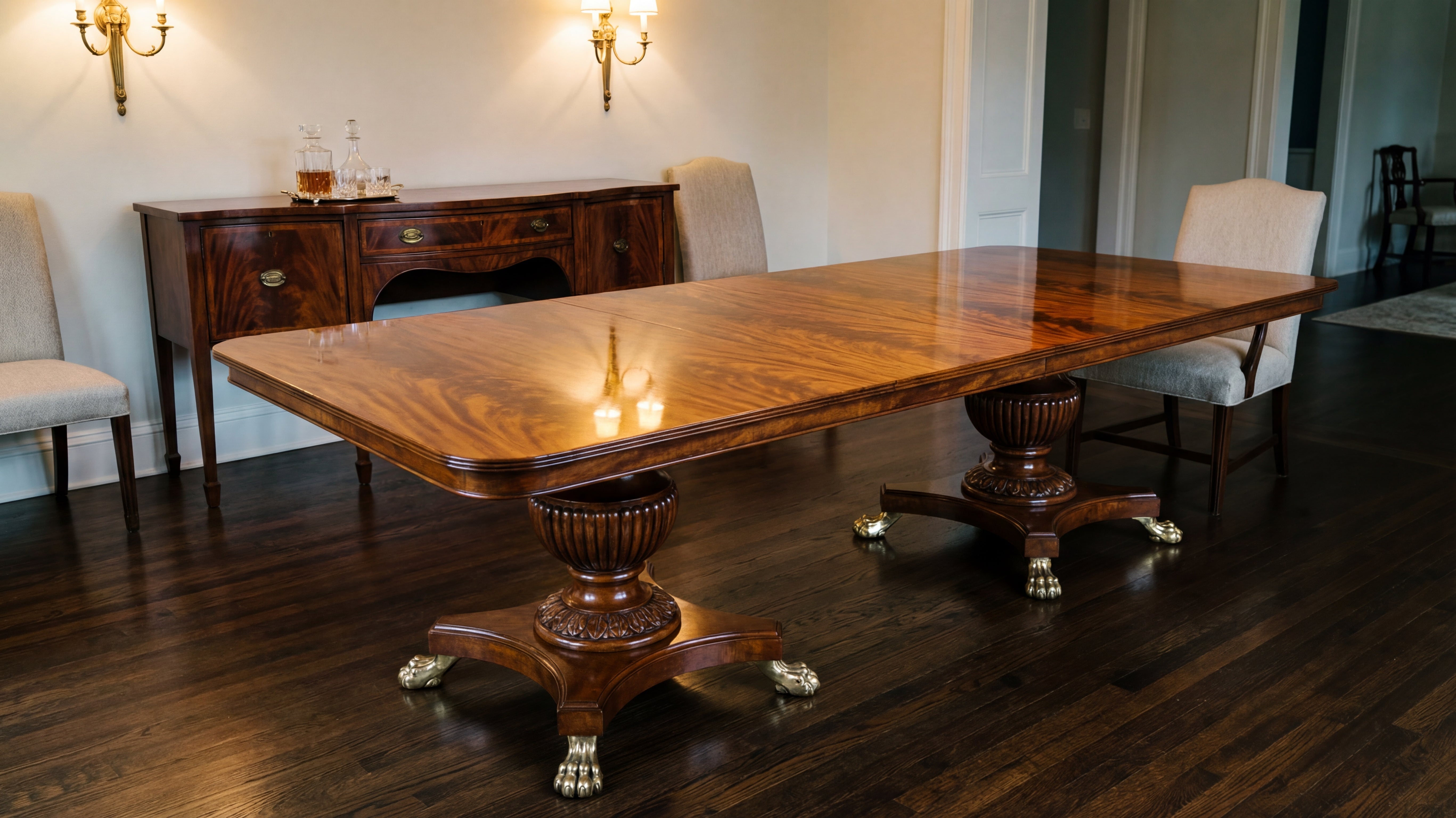
Exact dimensions. Your dining room is 14 by 16. Your table needs to extend from 84 inches to 120 to accommodate your family at the holidays and your four closest friends on a Tuesday. Your craftsman builds that table. No compromise, no hunting, no waiting years for the right piece to surface at auction.
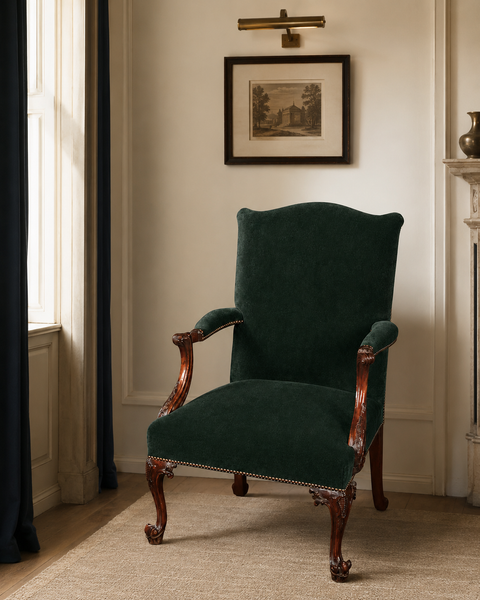
Material specification. You choose the mahogany grade, the finish type, the hardware, the upholstery fabric. A reproduction built to order is built for your room and your preferences. The best craftsmen work from original period patterns and historical sources, which means the design is correct. The execution is yours.
Finish consistency. A good live finish on solid mahogany applied today will develop natural character over years of use. It will not arrive damaged. It will not surprise you.
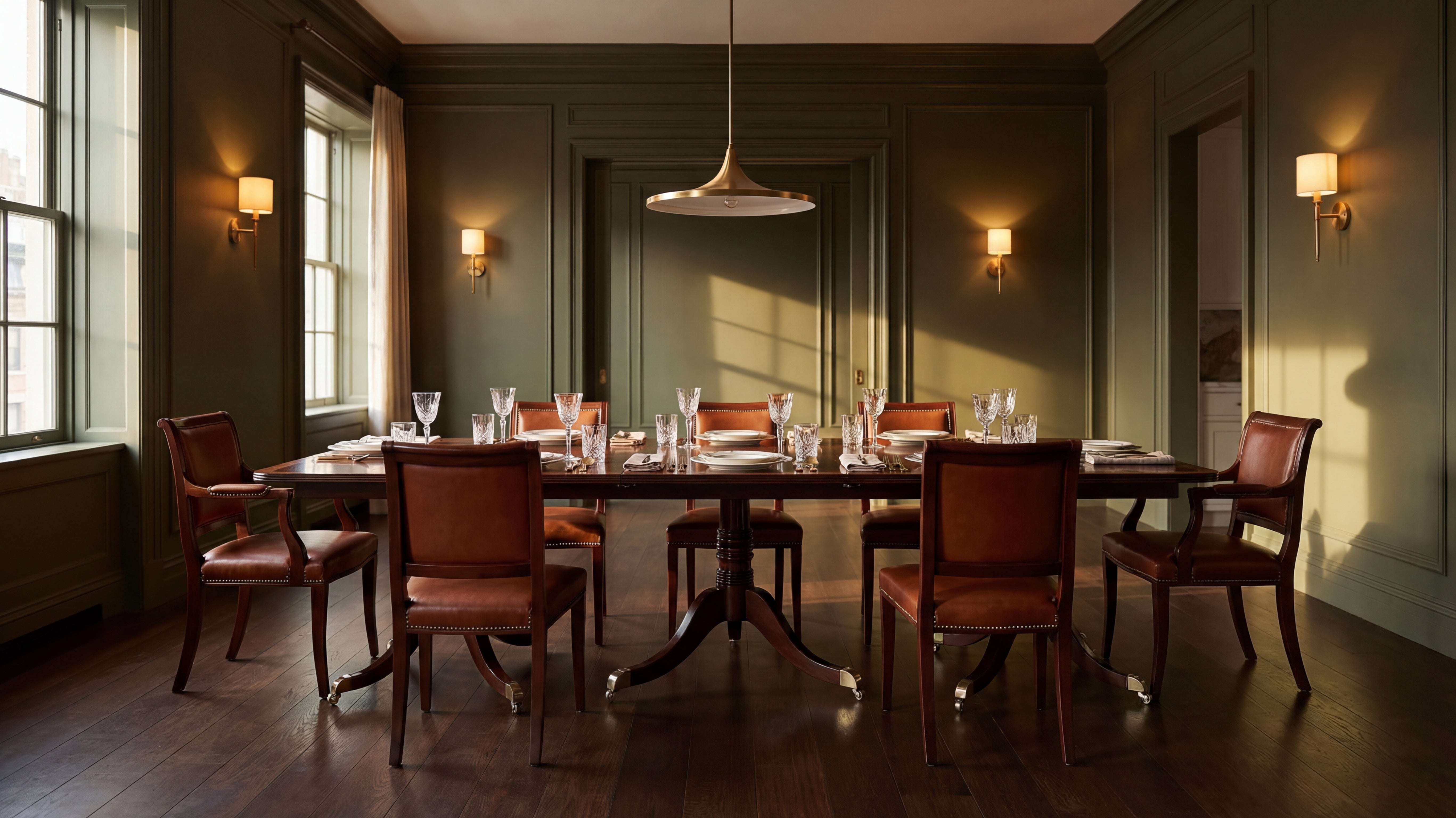
Matched sets. You can buy a table, eight chairs, and a sideboard that were built by the same hands in the same shop from the same mahogany stock. Perfectly matched. That is simply not achievable in the antiques market for most buyers without a decade of patience and a substantial budget.
Customization for how you actually live. A Chippendale secretary desk built in 1780 has pigeonholes designed for quill pens and paper folded to a period-standard size. A reproduction built today can have the same historical exterior with interior proportions that fit modern files and a laptop. You are not pretending it's 1780. You're getting the aesthetic of that era built to work in your life.

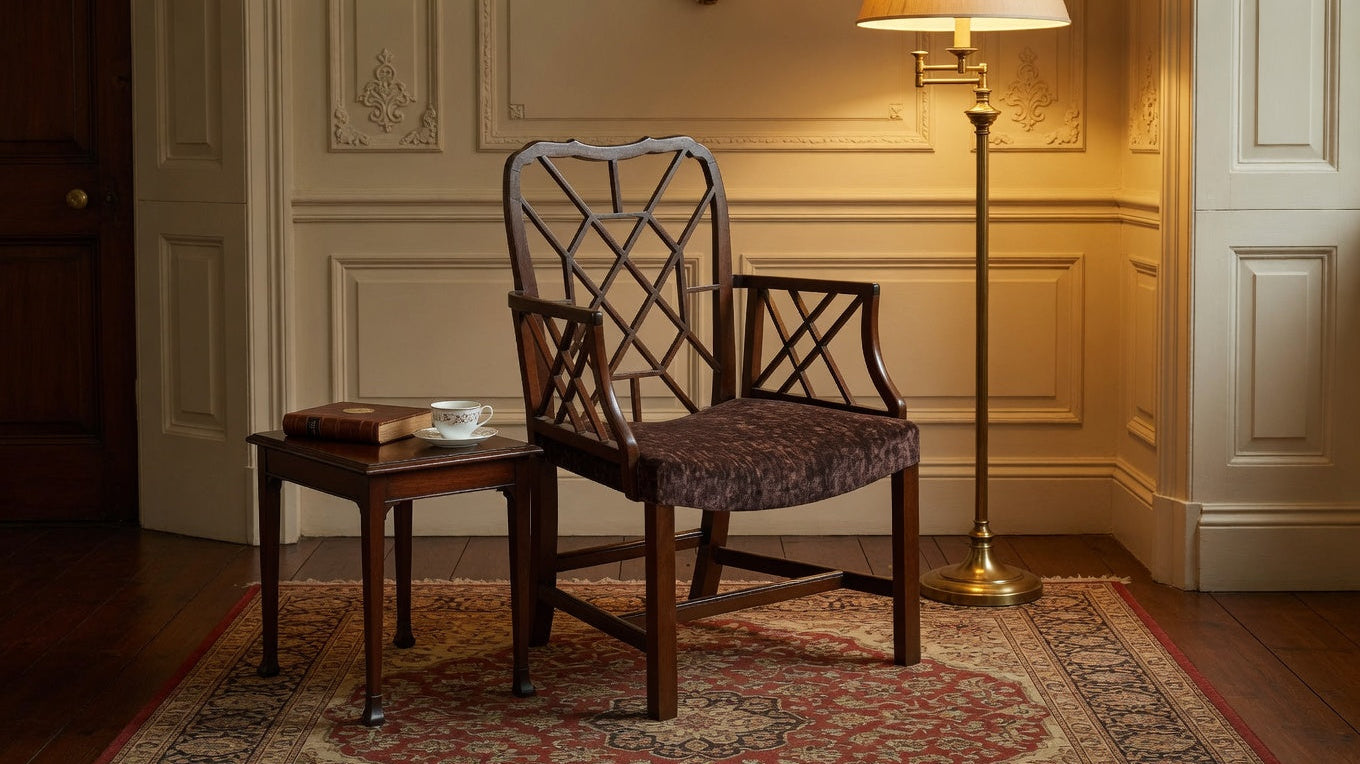
Traditional hand-carving of a ball-and-claw foot. The best reproduction makers work with the same tools, techniques, and materials as the original 18th-century cabinetmakers.
The Craft Question: Is a Reproduction "As Good"?
This is the question buyers ask most often, and the answer depends entirely on who made it.
There is reproduction furniture and there is reproduction furniture. A container-shipped import claiming to be "Chippendale style" and a hand-built piece from a cabinetmaker who studied period examples and works with traditional joinery and solid wood are not the same thing in any meaningful sense.
The marks of genuine quality in a reproduction:
Solid wood throughout. Not veneer over MDF. Not engineered wood with a mahogany face. Solid mahogany in the structural components, with bookmatched or figured veneers used only where original cabinetmakers used them, for aesthetic effect, not structural compromise.
Period joinery. Mortise-and-tenon construction. Dovetail drawers. Pegged joints where appropriate. If the piece is held together by pocket screws and staples, it does not matter how it looks from across the room.
Hand-carved detail. The ball-and-claw foot on a Chippendale chair should show the slight variation of human hands, not the mechanical perfection of a CNC router. An expert can tell immediately. More importantly, it feels different to touch.
Appropriate finishing. A French-polished or hand-rubbed oil finish on solid mahogany behaves like wood. It moves with the piece. It accepts wear gracefully. It can be spot-repaired. A catalyzed lacquer finish over veneer will chip, peel, and age badly.
The best reproduction makers are working at a level that equals the original craftsmen. This is not a romantic claim. The tools are better, the wood selection is more controlled, and the knowledge of period construction is more documented now than at any point in the past hundred years. A piece from a serious craftsman, built to the specifications of an original with correct materials and methods, is not a lesser object. It is a different kind of heirloom.
Who Should Buy an Antique and Who Should Buy a Reproduction
Buy a genuine antique if:
You are collecting. The historical authenticity and provenance matter to you as much as the object itself. You have time to search, expertise to evaluate (or access to someone who does), and flexibility on dimensions and finish. You view the purchase as part investment, part acquisition. You understand the condition variables and can absorb them.
Buy a reproduction if:
You want the design language of a period without the condition risk and dimension constraints. You want matched sets for a complete room. You want to specify exact dimensions, wood grade, and finish. You want furniture that will be used, that might see grandchildren, that needs to function every day as well as it looks. You want the security of knowing exactly what you're getting.
Many buyers fall into a third category: they want both. An antique mirror with a reproduction console table beneath it. A period oil painting above a custom mahogany sideboard. An inherited set of dining chairs re-upholstered to match a new table built to seat your actual family. This is, frankly, how the most interesting traditional rooms are built. The skill is knowing which role each type of piece plays.
The Tariff Math, Honestly Stated
Let's put a number on it.
An authenticated English Regency sideboard in good condition, appropriate size, through a reputable dealer or auction house, will typically run $8,000 to $25,000 depending on provenance, size, and condition. Before the recent tariff increases, the buyer's total cost including premium, shipping, and customs was fairly predictable. Today, that customs calculation has a new variable. Dealers are adjusting asking prices upward to protect their margins.
A custom mahogany reproduction of the same Regency form, built to your exact dimensions by a serious craftsman, runs meaningfully less. The exact price depends on scale and complexity, but you are typically looking at $4,000 to $12,000 for a piece in that category, built new, to your specifications, with full structural integrity.
For a matched set, the math becomes more dramatic. A dining table and eight chairs sourced as matched antiques could represent years of acquisition and prices that compound at every stage. A matched reproduction set, built at once from the same materials, is a straightforward transaction.
None of this means reproductions are cheap. Quality reproduction furniture from a serious maker is a significant purchase. But the value proposition, quality received per dollar spent, has shifted. And the tariff environment accelerated that shift.
The EGA Philosophy: Built to Become Heirlooms
At EGA Home, we build furniture that we expect to outlive everyone currently alive. That means solid mahogany throughout, traditional joinery, hand-carved details, and finishing methods that have worked for three centuries.
We are not competing with antiques. We are building the antiques of the future.
A piece leaving our shop today is built from the same primary species, with the same design references, and with the same intent as the originals. The difference is that you get to specify exactly what you need. Dimensions your room requires. Finish that suits your aesthetic. A matched set your dining room can use every night.
Our dining tables are built to seat your family and extend for the holidays. Our Chippendale and Hepplewhite chairs are built with the same carved detail as period originals and upholstered in whatever fabric makes your room work. Our sideboards are built to scale, in proportion to the rooms that actually exist today, which tend to be larger than 18th-century Georgian interiors.
And every piece is built with the understanding that in fifty years, someone will look at it the way you currently look at the antiques you admire.
The Honest Summary
The antique market has real value. Genuine period pieces with documented provenance are irreplaceable objects. If that's what you're after, pursue it with expertise and patience.
But for buyers who want the design tradition, the material quality, the heirloom character, and the craftsmanship of English period furniture, without the condition risk, dimension compromise, and now the escalating import cost, reproduction is not a consolation prize.
It is, increasingly, the smarter choice.
The tariff conversation changed the math. The quality available from serious reproduction makers means the math was already changing. 2026 is the year a lot of buyers are doing the arithmetic for the first time and arriving at the same answer.
Browse EGA's dining collection, explore our upholstered seating, or contact us directly for a custom consultation. Every piece ships white glove, built to the dimensions your room requires, and guaranteed to outlast you.