

The phrase "handcrafted furniture" has a problem. It appears on fast-furniture websites next to particle board dressers. It shows up in Wayfair product titles describing chairs assembled from pre-cut MDF panels. It gets applied to pretty much anything that required a human to touch it at some point in the supply chain.
So before you spend $3,000 on a dining chair that someone's calling "artisan-crafted," it helps to know what that word is supposed to mean, and how to tell when it actually does.
This guide covers everything you need to know to buy furniture that justifies its price: what to look for in construction, how to evaluate materials, which questions to ask before committing, and how real handcraft shows up in the details most buyers never think to check.
What "Handcrafted" Actually Means

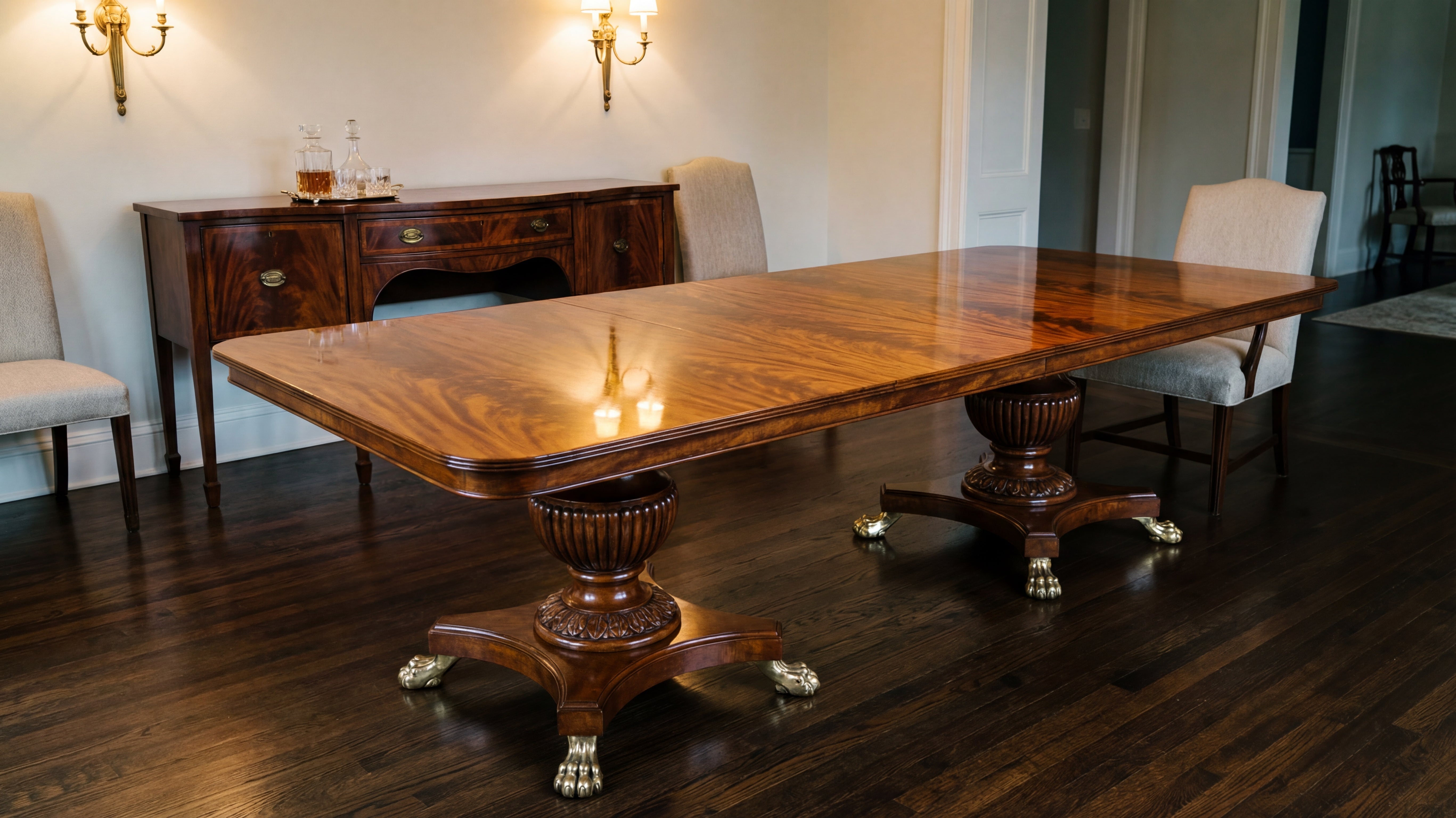
A round pedestal dining table. The carved column base and period-accurate proportions are the hallmarks of handcraft, not manufacturing.
The honest definition is narrower than the marketing definition. Handcrafted furniture is furniture where skilled human labor, not automated machines, is responsible for the aesthetic and structural decisions.
That means:
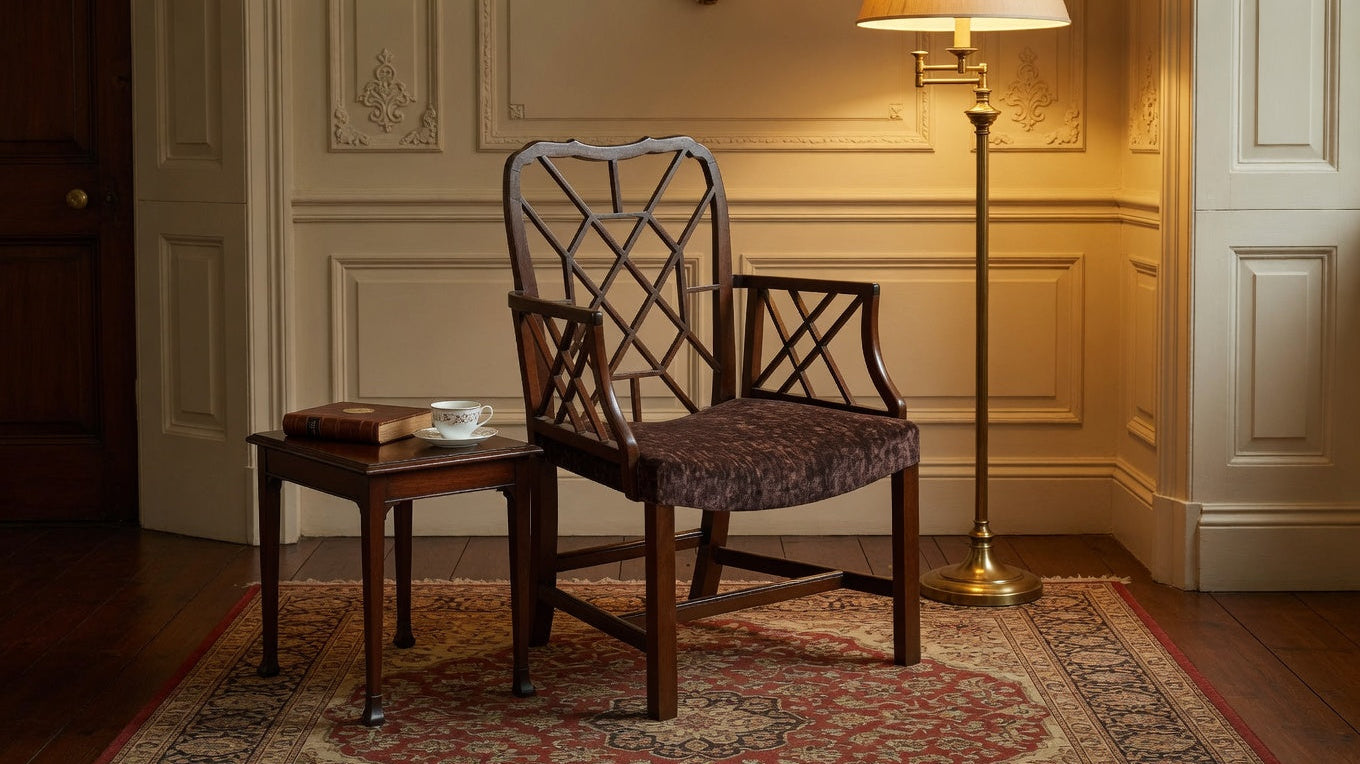
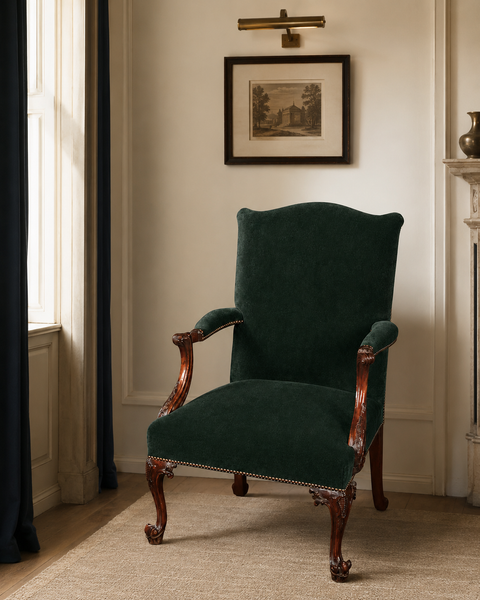
A cabinetmaker choosing how to match grain patterns across a tabletop panel. A carver spending twenty minutes on a single cabriole leg to get the silhouette right. A joiner cutting a mortise-and-tenon by hand and fitting it by feel. An upholsterer hand-tying springs and shaping padding over a frame built to last four decades.
None of these things can be done by a router, a CNC machine, or a robot arm. They require someone who has spent years developing feel for the material.
What that is not: a chair assembled by workers in a factory from pre-cut, pre-shaped components where every piece is identical and the "handcraft" is limited to screwing parts together. That's manufacturing. It might produce a decent chair. It is not handcraft.
The distinction matters because handcrafted construction, done correctly, produces furniture that actually performs differently over time. The joinery doesn't fail. The wood moves with the seasons without cracking. The finish wears gracefully. The proportions hold because they were set by someone who understood why they matter.
The Five Markers of Genuine Quality
Whether you're buying in person or online, these five things separate furniture built to last from furniture built to sell.
1. The Joinery
This is the most important structural indicator you can assess without a woodworking degree. The best solid furniture uses mortise-and-tenon joints where rails meet legs, dovetail joints where drawer boxes meet drawer fronts, and generally prioritizes mechanical connection over adhesive or hardware.
On lower-quality pieces, you'll find dowel joints, pocket screws, and staples. These hold initially. They fail over years of use as the wood expands and contracts. Adhesive alone, in any amount, is not a joint. It's a substitute for one.
If you're buying in person, look at the underside of chairs and tables. Look inside drawers. The construction is less polished there, which means the manufacturer had less reason to hide it. What you see in the unseen places is more honest than what you see on the show surfaces.
2. The Wood
Solid hardwood versus veneered engineered wood is the fundamental material question, and the gap in performance is significant. But it's not a binary where solid wood is always superior. A high-quality veneer over solid wood substrate can be excellent. The problem is when the substrate is MDF or particleboard, which has poor screw-holding, swells with moisture, and eventually delaminates.
The woods that matter for traditional furniture: mahogany, walnut, cherry, and maple. These are dense, stable, fine-grained hardwoods that have been the foundation of American period furniture since the 18th century. Each has distinct properties.
Mahogany is the most dimensionally stable of the group, meaning it expands and contracts less with seasonal moisture changes. This is why it dominated American and English furniture from 1750 through the Federal period. A mahogany dining table built well does not rack or check over time. It becomes, over decades, more itself.
Cherry darkens richly with age and light exposure. Walnut has a complex, dark grain and works beautifully for furniture where drama is the goal. Maple is harder than all of them, ideal for surfaces that take heavy daily use.
What to avoid: poplar, pine, rubber wood, and anything labeled "composite wood" or "engineered hardwood" used as a primary structural material. These are acceptable for interior components where they're not load-bearing. They're not acceptable as the main material of a frame you're expecting to last.
3. The Finish
Traditional finishes, applied properly, are harder to apply, more labor-intensive, and produce results that feel and age differently than modern polyurethane coatings.
The benchmark is French polish, a shellac-based finish applied by hand in dozens of thin coats that are rubbed in with a cloth pad. The result is a surface with visual depth, a tactile warmth, and a natural repair path: when it scratches, it can be burnished out or locally touched in. It does not chip like lacquer. It does not yellow like polyurethane. It ages.
Oil finishes, danish oil, and hand-rubbed oil-and-wax finishes are similarly maintenance-friendly and visually excellent. They highlight wood grain rather than sitting on top of it.
Modern catalyzed lacquer and polyurethane are not inherently bad, but the good ones require skill and proper application. The cheap ones look plastic after a few years.
Ask specifically: how was this finished? If the answer involves references to "durable protective coating" without specifics, probe further.
4. The Proportions
This one is harder to articulate but obvious once you know to look. Period furniture that was designed well has proportions that work. The relationship between a chair leg's width and height, the depth of a table apron relative to the top overhang, the height of a bookcase's upper doors relative to the lower ones. These things were worked out over centuries by people who built furniture and lived with it.
Modern reproductions that get the proportions wrong feel wrong, even if you can't name why. You look at them and something doesn't resolve. The ones that get it right look right from across the room before you touch them.
This is the argument for buying from makers who specialize in a period. Someone who has spent thirty years building Chippendale-style case pieces has absorbed the proportion vocabulary of that style in a way that someone who builds "period-inspired" furniture as one line among many has not.
5. The Hardware
Period-appropriate hardware on traditional furniture tells you something about the maker's commitment to authenticity. Solid brass drawer pulls, period cast bail handles, mortised hinges, hand-filed details: these things add cost and indicate that the maker didn't compromise on the visible elements.
Pressed steel hardware, plastic knobs, and stamped hinges on an otherwise nice piece are a signal that corners were cut somewhere. The hardware was the least-expensive place to cut them. Which means you should wonder where else.
Questions to Ask Before You Buy

Case pieces like this arched display cabinet show the most demanding handcraft: crown molding, mullion glazing bars, and precisely fitted carcase construction.
If you're dealing with a real maker or knowledgeable retailer, these questions will be answered without hesitation. If they produce evasion, that's information too.
Where is this made? American-made, British-made, and European-made furniture typically has more rigorous quality controls and stronger joinery traditions than offshore-produced pieces at comparable price points. This isn't an absolute rule, but it's a useful filter.
Who made it? Can you name the manufacturer, the workshop, the maker? "We source from quality manufacturers" is not an answer. If they know who made the furniture, they'll tell you. If they don't, they either don't know or are hiding it.
What is the frame material? For upholstered pieces especially: is the frame solid hardwood? Kiln-dried? What is the spring system (eight-way hand-tied versus sinuous wire)? Is the filling down, down-blend, or foam? These details separate $800 sofas from $8,000 sofas, and knowing them helps you evaluate whether a price is justified.
What is the warranty? Manufacturers who build furniture to last are not afraid of warranty claims, because they don't get many. A lifetime warranty on the frame is a signal of structural confidence. A one-year warranty on everything is a signal of the opposite.
Can I see construction details? Any seller with a quality product will show you the underside of a table, the inside of a drawer, the back of a case piece. If they resist, they have a reason.
What "Custom" Should Mean
Custom furniture occupies a specific position in the quality conversation. A piece built to your specifications, in the finish you want, in a size that fits your specific room, is necessarily made one at a time. That single-unit production model requires more skilled labor per piece and produces something that cannot be replicated by pulling from warehouse stock.
The problem is that "custom" has been diluted the same way "handcrafted" has. A sofa with twelve fabric options and three leg finishes is not custom in any meaningful sense. It's configured manufacturing.
Real custom means: your dining table can be a non-standard dimension. Your bookcase can be sized for the exact wall. Your finish can be matched to an existing piece. If those options are possible, you're dealing with someone who actually builds furniture rather than configures it.
For period reproduction furniture especially, the availability of custom options signals something important: the maker has the skills to deviate from standard patterns, which means they understand the patterns well enough to vary them. That's a competence indicator that matters.
How to Evaluate a Price
The honest answer is that genuinely well-made furniture is expensive, and the prices that feel high usually reflect real costs. A Chippendale-style mahogany side chair, hand-carved, mortise-and-tenon frame, eight-way hand-tied springs, wool-blend upholstery, runs $1,500 to $3,000 from a real maker. That price reflects: premium lumber, skilled carving labor, upholstery labor, material costs, and reasonable margin.
The $280 "Chippendale-style accent chair" on a furniture aggregator is made of rubberwood with a vinyl print to simulate grain, assembled with pocket screws, filled with polyfoam, and was designed to be replaced rather than repaired.
The comparison that clarifies the price question is cost-per-year-of-use. A $2,500 chair that lasts forty years costs $62.50 per year. A $280 chair that fails in five years costs $56 per year and ends up in a landfill. The quality piece is competitive on economics alone before you factor in that it's the one you still want in your room in year twenty.
What to Look for When Buying Online
Most furniture purchases happen online now, including high-quality pieces. The challenges are real: you can't check the joinery, feel the wood, test the proportions. But there are signals.
Photography that shows the back, the interior of drawers, and construction details is a sign that the maker is not hiding anything. Generic lifestyle photography with three-quarter-front angles only is less useful for evaluation.
Detailed product descriptions that specify wood species, finish process, construction method, and upholstery fill are a sign of a maker who knows what they built. Vague copy that repeats "handcrafted quality" without specifics is a sign of someone marketing around the absence of those specifics.
Customer testimonials that reference longevity and durability rather than just aesthetics matter more than overall star ratings. Someone who says "this table has been in daily use for twelve years and looks as good as the day we got it" is giving you durable signal.
Return policies and warranty terms matter more for expensive purchases than they do for commodity items. A retailer willing to accept returns on a $4,000 table is confident in what they're selling.
Making the Investment Decision

The antique French finish on this dining table is hand-applied, not sprayed. The aged quality deepens over time rather than wearing off.
The mindset shift that makes quality furniture easier to justify financially is moving from "price of this item" to "how does this item fit into a room I'm trying to build over time."
Most well-furnished rooms are built slowly. A great dining table first. Chairs that match over the following year or two. A sideboard when you find the right one. Each piece is evaluated not just for what it costs today but for how long it will work, how it will age, and how well it will fit with things you might add later.
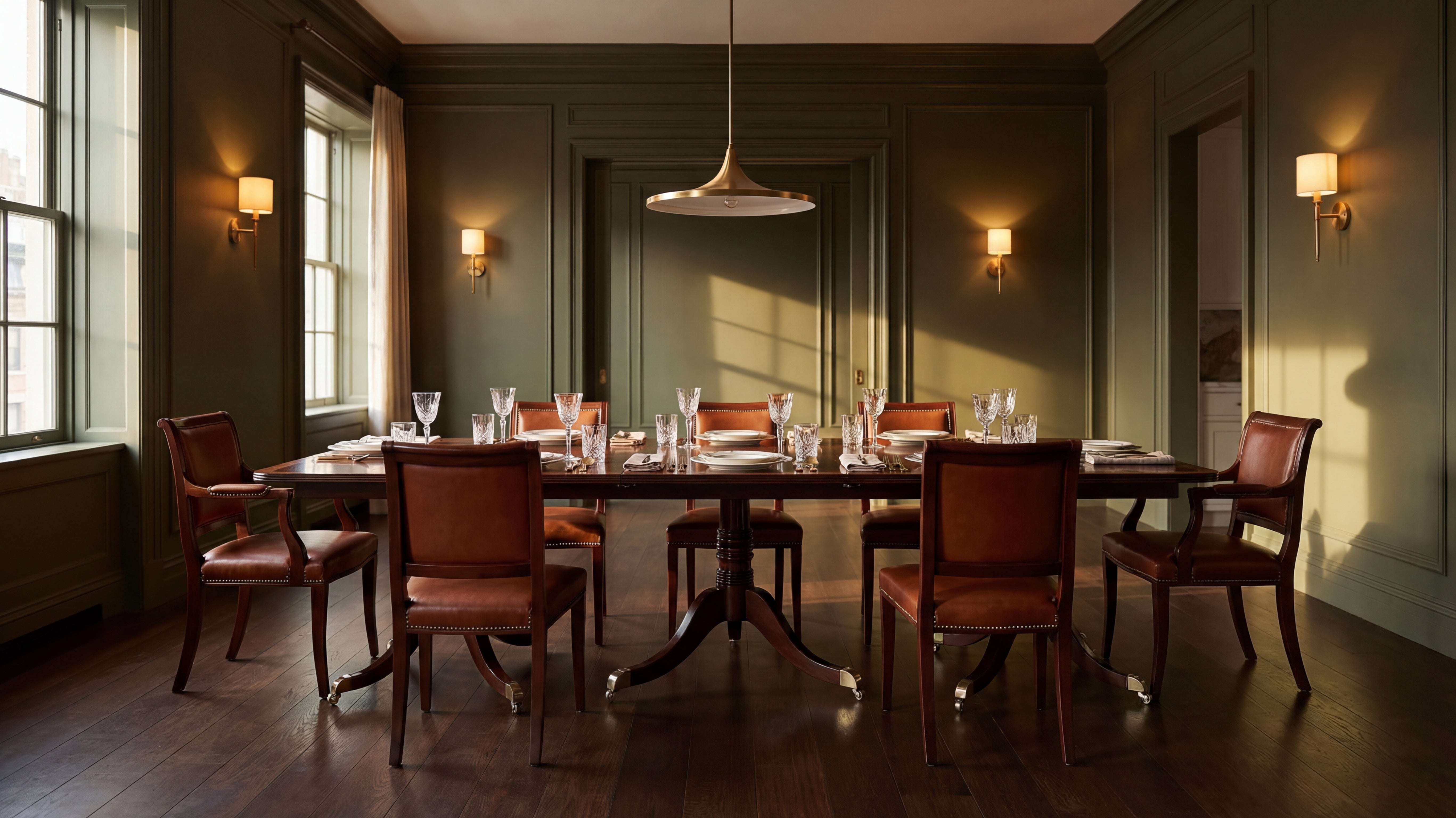
Furniture designed in a coherent tradition, built to actual period proportions, ages well together. A set of Chippendale-influenced chairs around a Georgian-proportioned table works because the vocabulary is consistent. The alternative, accumulating pieces from whatever sale is current this season, tends to produce rooms that feel assembled rather than built.
The pieces that hold a room together and keep working for twenty years are almost always the ones where someone made careful choices about construction and material. That quality is available. It requires knowing what to look for.
EGA HOME carries handcrafted traditional furniture from verified makers. All pieces are white-glove delivered and backed by our satisfaction commitment. Questions about construction or sourcing? Contact us.