


There is a number hanging over 2026 that most people have not fully processed yet: 250.
Two hundred and fifty years since the Declaration of Independence. The America 250 Semiquincentennial is the most significant national milestone in a generation, and it is doing something unexpected to the furniture market. Designers surveyed by Country Living named the Semiquincentennial as an active force in what their clients are buying right now. Not as nostalgia. As intentionality. The language they used: "the DNA of American craftsmanship."
That phrase is worth sitting with. The DNA of American craftsmanship.
The Chippendale and Federal furniture traditions that emerged from colonial American workshops represent a high point in Western furniture design. The techniques those craftsmen developed, hand-cut dovetails, carved ball-and-claw feet, hand-rubbed finishes, did not stay in America. They spread to workshops around the world and became the universal standard for building furniture at the highest level.
If there is a year to invest in a piece of furniture that carries that lineage, it is this one.
What the 250th Is Actually Doing to the Market
Let me be clear about what this is not. It is not a red-white-and-blue sales event. It is not bunting and fireworks themed furniture.
What is happening is subtler and more durable. Interior designers report that affluent buyers are framing furniture purchases around legacy this year in a way they have not in decades. The question is not just "do I like this table?" It is "does this table belong in a house built for the next 100 years?"
That is a fundamentally different buying posture. And it maps almost perfectly to handcrafted reproduction furniture built the traditional way.
The Federal style was America's first truly national design language. After independence, American craftsmen adapted Hepplewhite and Sheraton motifs from England but added their own vocabulary: patriotic eagles, wheat sheaves, stars. The style made the argument, in carved wood, that the new republic had culture and permanence worth expressing. Buying a Federal reproduction piece in America's 250th year is not a decorating decision. It is a small, quiet statement.
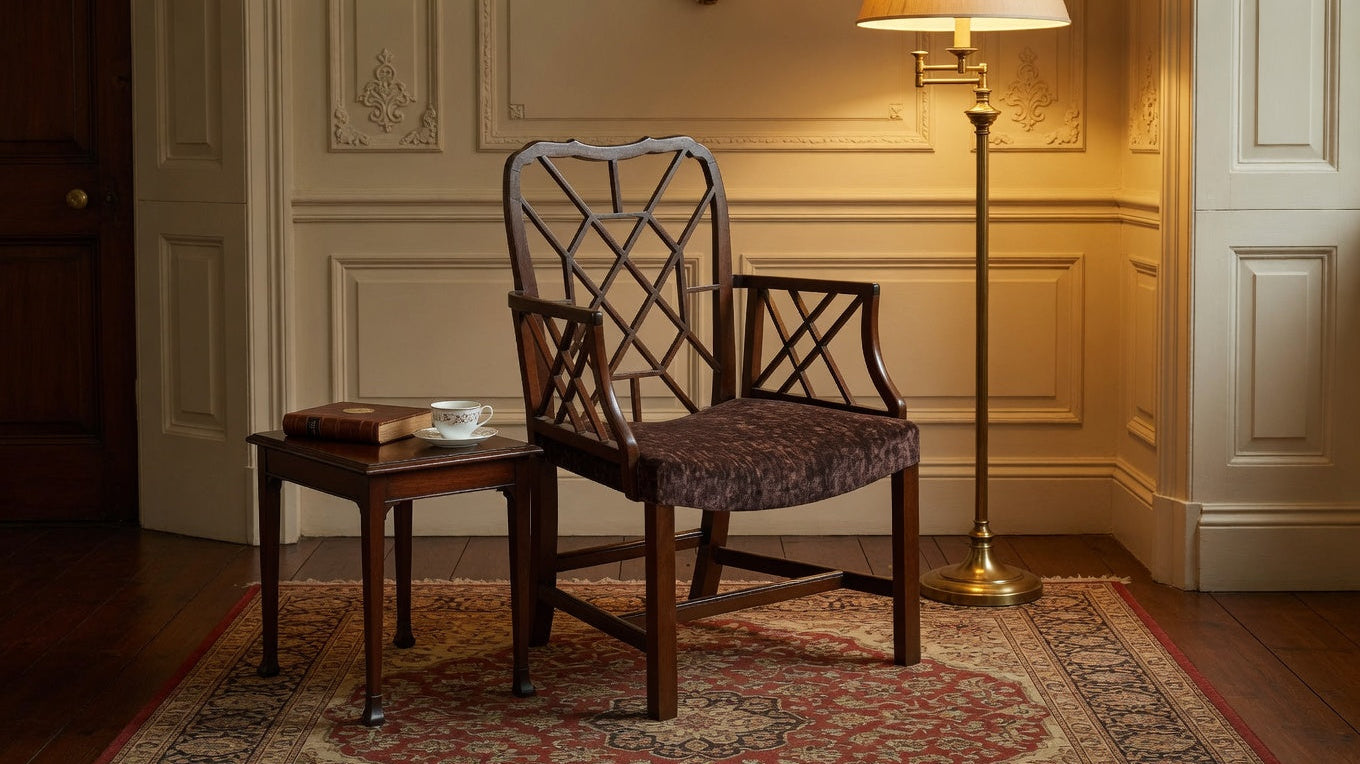
The Chippendale style tells a similar story from the colonial period just prior. American Chippendale, particularly from Philadelphia and Newport workshops, is widely considered the highest expression of colonial craftsmanship. The ball-and-claw foot, the pierced splat back chair, the bonnet-top secretary desk. These forms are distinctively American even though they derive from English originals. Thomas Chippendale published his Director in London in 1754. American craftsmen ran with it and made it their own within a generation.

American Chippendale vs. English Chippendale: The Distinction That Matters
Most people do not realise how different American and English Chippendale furniture actually became.
English Chippendale tends toward refinement. The carving is precise and restrained, the mahogany often lighter in colour, the overall effect closer to the gentleman's townhouse. American Chippendale, especially from the Philadelphia school, went bolder. The carving is deeper and more confident. The ball-and-claw feet are more sculptural. The proportions are bigger and more assertive. There is a physical confidence to an American Chippendale piece that reflects something about the people who made it and the people who bought it.
If you have ever seen a Philadelphia highboy in a museum, you know exactly what I mean. The thing looks alive.
Today, the finest Chippendale reproduction furniture honours that tradition regardless of where the workshop is located. The carved details, the proportions, the choice to go bold rather than merely correct. When a designer picks these pieces for a dining room, they are not just picking a style. They are picking a lineage. See our Chippendale-style dining chairs.
The Federal Style: America's Original Design Language
The Federal period runs roughly from 1790 to 1820. It is the first purely American furniture style in the sense that it was conceived, marketed, and sold as an expression of the new nation's aspirations.
The primary influences were English: Hepplewhite's shield-back chairs, Sheraton's straight tapered legs and inlay work, Adam's architectural ornament. But American makers transformed these sources with patriotic motifs, lighter forms, and a clarity of line that felt modern for the time. The eagle carving that appears on a Federal card table from 1800 was a political statement as much as a decorative one.
Today, the Federal style reads as the most distinctively American of all period furniture traditions. It is not as well-known as Chippendale, and that is actually an opportunity for buyers. A beautifully made Federal sideboard or sofa table commands a room without the "museum piece" associations that sometimes follow heavier carved forms. It is formal without being theatrical.
For the buyer who wants period-connected furniture in 2026, the Federal style is worth serious consideration.
Our Georgian vs. Regency vs. Federal guide covers the technical differences in detail. The short version: if you love Hepplewhite's delicacy and Sheraton's refinement but want the American version of that sensibility, Federal is your answer.

What Separates Handcrafted From Mass-Produced
The meaningful distinction in furniture is not about where it is made. It is about how it is made. The finest traditional furniture shares the same characteristics whether the workshop is in Philadelphia, London, or Ho Chi Minh City.
The carving is done by hand. CNC routers can cut profiles. They cannot carve a ball-and-claw foot. The slight variations in each carved detail, the way the grain runs through the claw, the depth choices the carver makes on each piece: these are not reproducible by machine. Master carvers spend years developing the feel for mahogany that lets them make these decisions correctly every time.
The joinery is traditional. Mortise-and-tenon, dovetail, hand-fitted drawers. The joints that hold a well-made piece together are the same joints that hold 18th-century originals together. Furniture built this way does not fail. Furniture built with staples and dowels eventually does.
The wood is solid and selected. The finest reproduction furniture uses solid hardwood, typically mahogany, chosen for grain, figure, and colour match within a set. The live finish and French polish guide explains what that means for the surface. The short version: the wood is the point. You see it, you feel it, it matters.
The finish is applied by hand. No spray booths doing six pieces an hour. Each surface is rubbed, built, rubbed again. The final result is a piece that shows the hand that made it, which is exactly what buyers in 2026 are asking for.
The Durability Argument Has Never Been Stronger
Two hundred and fifty years ago, craftsmen built furniture that is still in use today. In houses. Not in museums. Families sit at dining tables from the 1790s. They write at desks from the 1780s. The pieces survived not because someone was careful with them, but because they were built beyond the requirements of their moment.
That is the standard that defines handcrafted reproduction furniture. Not "will this last 20 years." Not "will this survive a move." Will this be in the family 100 years from now?
It is a different design brief and it produces a different object. The weight is different. The visual density is different. The presence in a room is different. You feel the difference between a piece built to survive and a piece built to sell before the next trend arrives.
In a year when everyone is thinking about what the next 250 years looks like, that durability argument lands differently than it did in 2020.

Rooms Worth Thinking About
The Semiquincentennial buying moment is not a single purchase. The designers Country Living surveyed were clear that clients are thinking in rooms, in legacies, in complete statements. Here are the rooms that align most naturally with the period-connected brief:
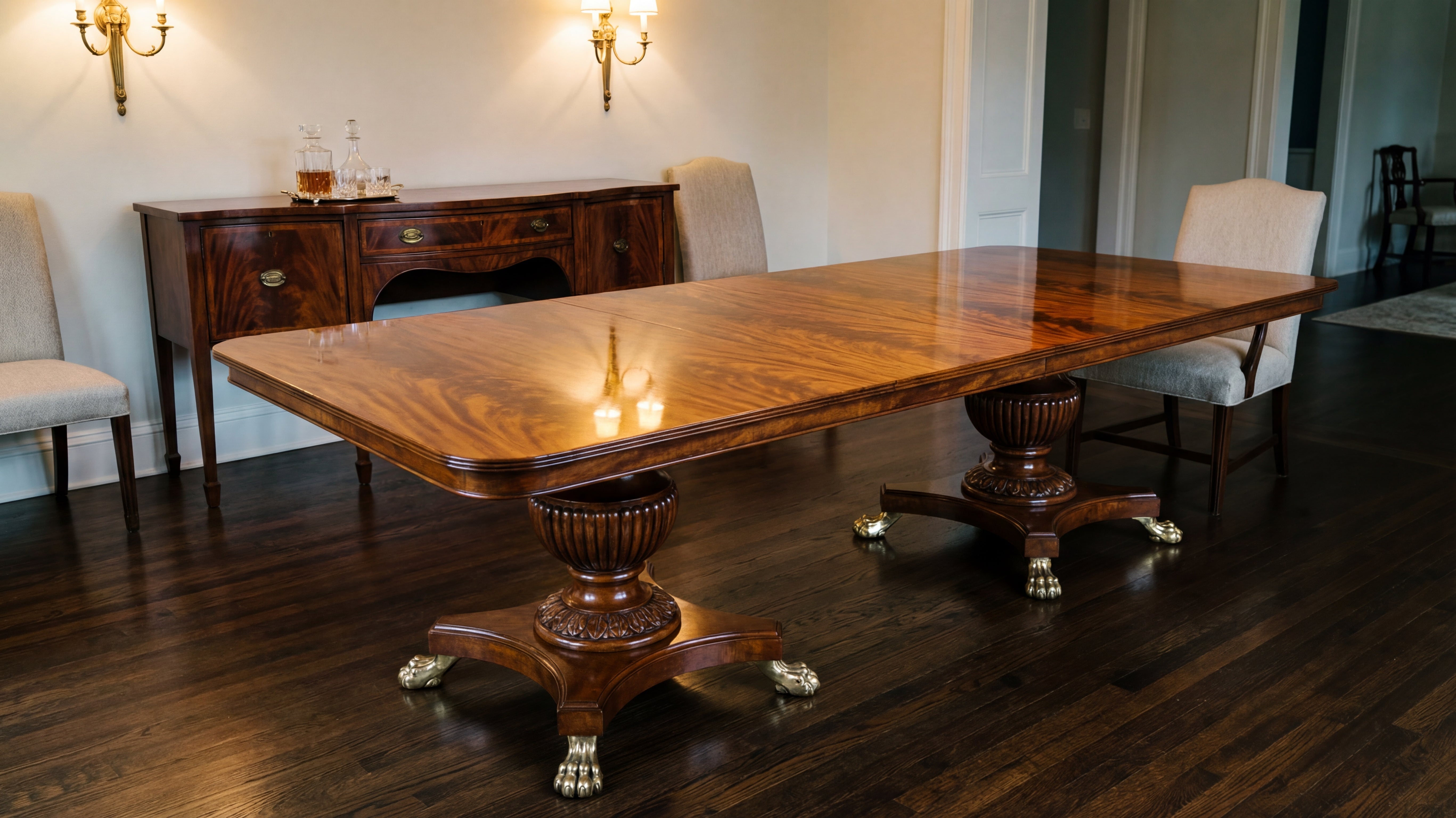
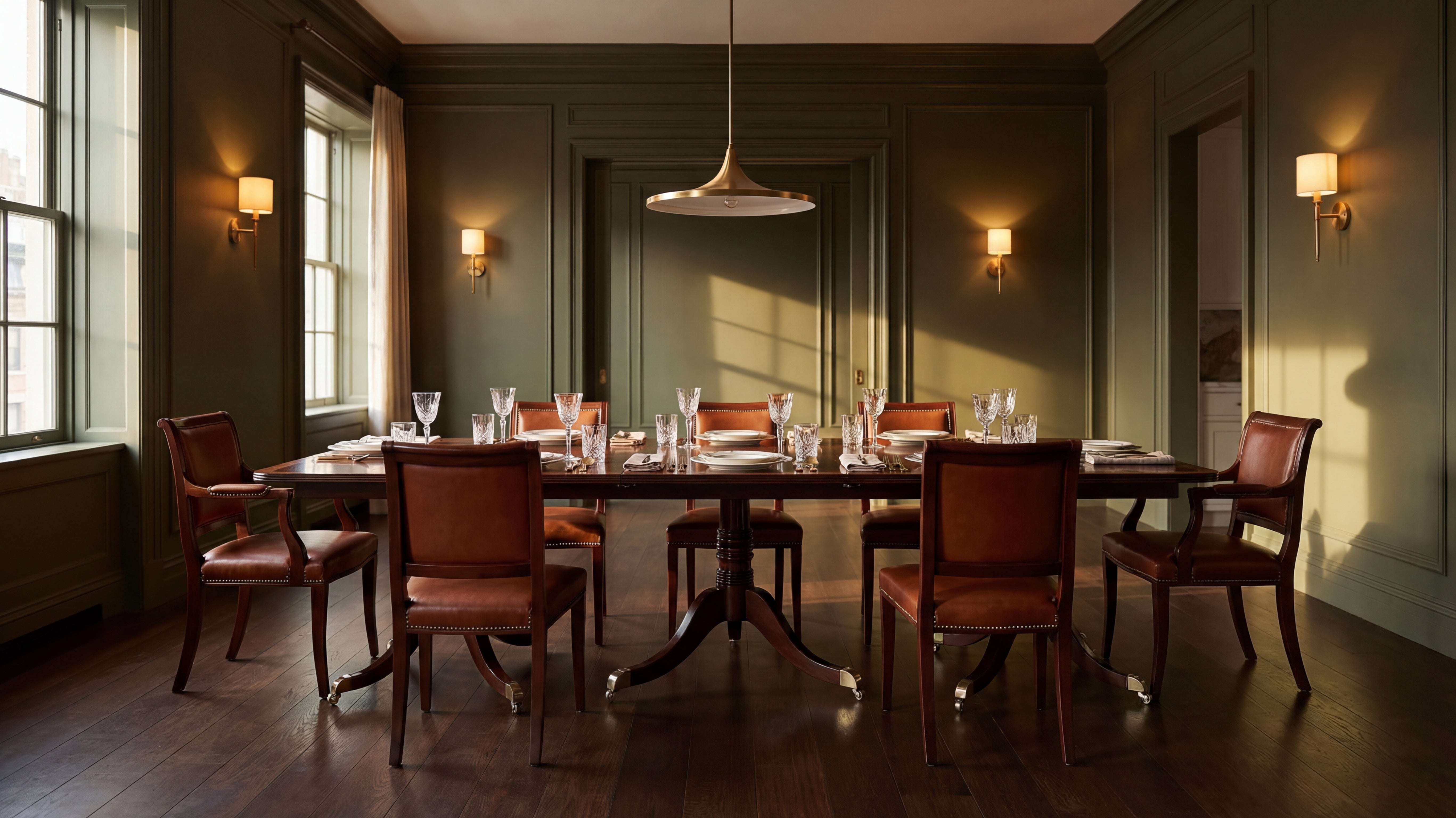
The formal dining room. A mahogany Chippendale dining table with ball-and-claw feet is the most direct expression of the American period furniture tradition available in a modern home. Set it with eight chairs in the Philadelphia Chippendale tradition and you have a room that would be at home in a 1780s house in Society Hill and equally at home in a house built yesterday. See our complete dining table collection.
The home library or study. The Federal period was, in many ways, the intellectual golden age of American furniture. The secretary desk, the drum table, the partners desk for the study that doubled as a receiving room. These forms were built by and for people who read, who corresponded, who thought. A study furnished with Federal or Chippendale mahogany pieces is making an argument about what kind of person lives in the house. See our home office desks.
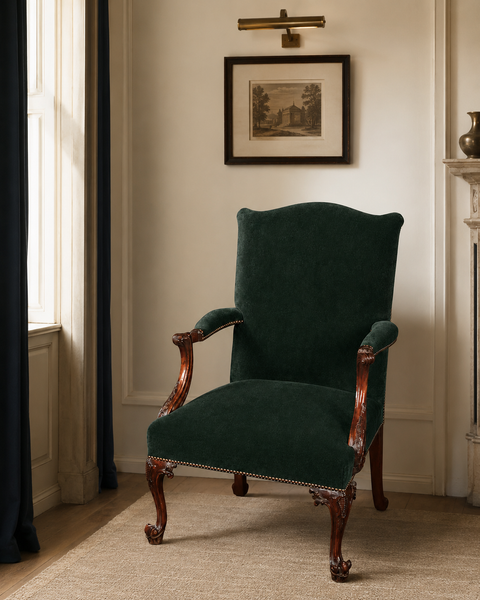
The living room anchor. A Chippendale sofa on a carved mahogany frame, with cabriole legs and ball-and-claw feet, is structurally and visually unlike anything in the contemporary market. It requires no justification, no "backstory," no design explanation. It looks exactly like what it is: a piece built in the 18th-century tradition, reproduced with the same materials and methods. See our sofa collection.
A Note on What 250 Years Actually Looks Like
The oldest piece of American furniture I have held in my hands was a Newport block-front chest from the 1760s. The Goddard-Townsend school. If you know the reference, you know the carving on the blocked front is still the most technically demanding furniture carving ever done in this country.
The finish on that piece, after 260 years of use, had developed a depth and warmth that no stain can replicate. The wood had been touched by so many hands over so many years that the surface had a quality beyond patina. It had memory.
A piece of furniture built to that standard today will have the same quality in 2276. That is what handcrafted, period-true furniture means. In 2026, in the 250th year of this country, that seems worth investing in.
Where to Start
If you are approaching this as a room-building project, start with the anchor piece: the dining table, the desk, the sofa.
If you know what you want, our dining table collection, chair collection, and home office desks are the right places to begin.
Either way, the pieces will still be there in 2276. Make sure what you choose is worth keeping.
EGA Home curates handcrafted reproduction furniture from the world's finest traditional makers. Our dining room collections, home office pieces, and living room furniture are available at egahome.com.
Related reading: Chippendale Furniture: The Complete Guide | Is Mahogany Furniture Worth the Investment? | Georgian vs. Regency vs. Federal