


Dark wood furniture in the living room is back, and the designers who saw it coming have stopped being polite about it.
Country Living surveyed 100 interior designers for their 2026 forecast, and the results were decisive: darker brown furniture and traditional silhouettes were named the two dominant furniture trends of the year. Martha Stewart weighed in by name. The Spruce published a piece in February 2026 explicitly calling out rolled arm sofas, skirted upholstery, and traditional forms as shapes designers are actively reaching for again. Houzz named "Refreshed Traditional Silhouettes" its top furniture trend.
When a hundred working designers say the same thing, it's not a trend. It's a correction.
I've watched the pendulum for a long time from where I sit at EGA Home, and I want to explain what's actually happening, what dark wood furniture looks like when it's done right for 2026, and how to avoid the traps that make people nervous about bringing it back.
Why Dark Wood Left in the First Place

To understand why dark wood furniture is returning, it helps to understand why it was pushed out.
Starting roughly in the mid-2000s, interiors media fell hard for Scandinavian minimalism. Light ash, white oak, painted pieces, bare walls, no molding. The aesthetic was clean, it photographed beautifully in small apartments, and it spread fast across Instagram and Pinterest. By 2015 it had become the default mode for aspirational home content.
Dark wood, mahogany especially, got caught in the crossfire. It was associated with the formal dining rooms and home offices of the previous generation, the heavy pieces that were being donated to consignment shops as people downsized. "Traditional" became code for "stuffy." "Formal" became code for "untouchable."
The problem is that this story was always about styling, not about the furniture itself. A mahogany dining table in a room with good light, modern upholstery, and a spare arrangement of objects doesn't look stuffy. It looks grounded. The furniture wasn't the issue. The way it was being used was.
That's the shift happening now. Designers are returning to dark wood because they've found the language to use it differently.
What the Design Community Is Actually Saying

The 2026 data points matter because they're not vague enthusiasm. They're specific.
When Country Living's survey named "darker brown furniture" a top trend, they weren't describing a single piece or style. They were describing a material return: rooms anchored by warm, deep wood tones rather than bleached or painted surfaces. Mahogany, walnut, dark cherry. Woods that carry history and depth.
Martha Stewart's confirmation carries particular weight here. She's not someone who chases microtrends. When she endorses a direction, it tends to reflect something durable rather than something seasonal.
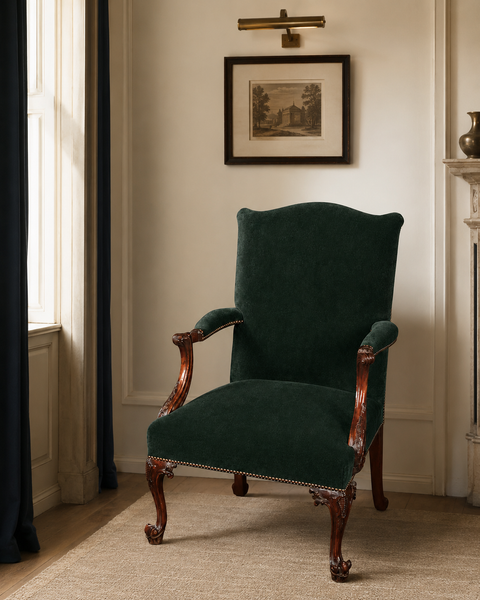
The Spruce's piece on "dated furniture shapes designers are loving now" added the form dimension: it's not just the material coming back. The rolled arm sofa, the skirted upholstery, the traditional silhouette are being paired with the dark wood. That combination, the English roll arm sofa in a green velvet next to a mahogany side table on a dark hardwood floor, is what a well-designed 2026 living room actually looks like.
This isn't nostalgia. It's designers recovering their confidence in forms that have been proven over a very long time.
What "Dark Wood Furniture" Actually Means
This is where a lot of people get stuck, so it's worth being precise.
"Dark wood furniture" is not a monolith. There are meaningful distinctions that determine how a piece reads in a room.
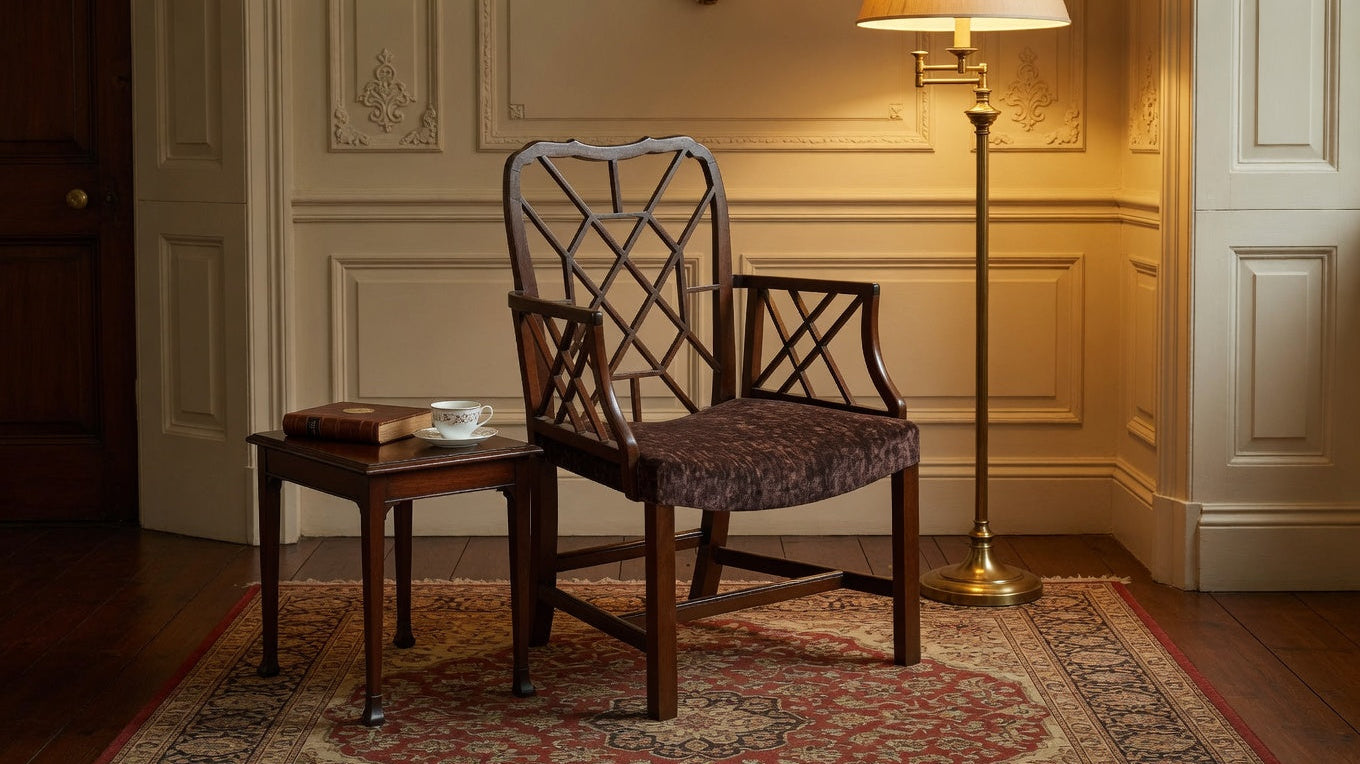
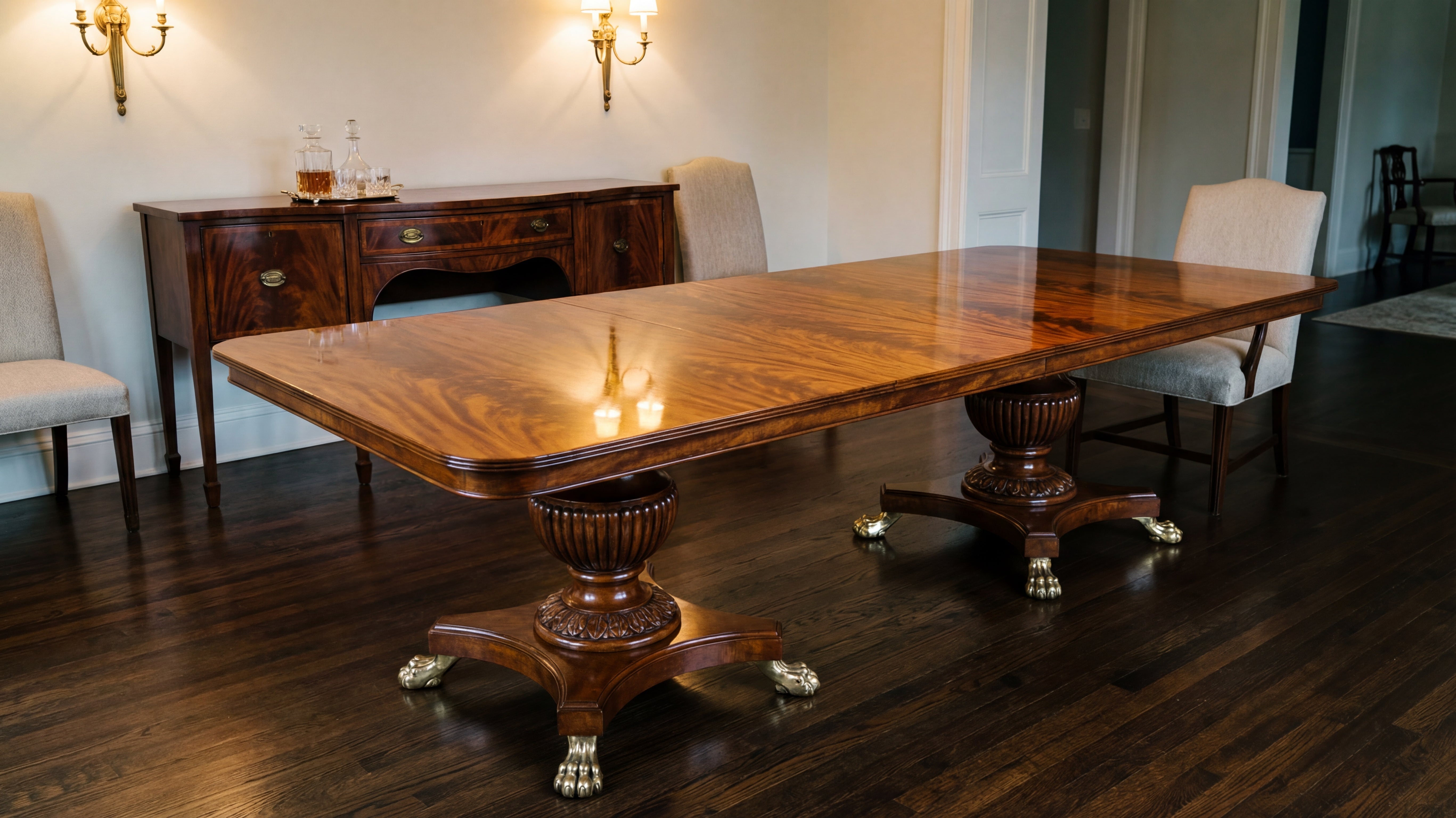
Mahogany is the traditional anchor. It has a warm red-brown undertone that shifts toward amber in direct light. Its figure, the natural grain pattern, varies dramatically by cut. Flame mahogany has a rippled, almost three-dimensional quality that's difficult to replicate in any other material. This is the wood behind most English period furniture, from Georgian breakfronts to Chippendale dining chairs, and it remains the material that gives a room a specific sense of permanence. If you're building a living room that should feel like it's been there for decades, mahogany is usually the right answer. Walnut is slightly cooler, with a grey-brown undertone rather than red-brown. It tends to read more contemporary within a traditional room, which is useful when you want to blend periods or keep a space feeling lighter while still anchoring it with a dark wood. Dark-stained oak or pine is a different conversation entirely. These are pieces stained to approximate the look of darker woods. They can be well-made, but the stain sits on top of the grain rather than being part of it, and over time it reads differently than a species that's naturally dark. For pieces you're buying as investments, species matters.
For a living room anchored in dark wood, mahogany or walnut are the woods worth knowing. The rest are approximations.
How to Use Dark Wood in a 2026 Living Room
Here's the honest answer: the difference between a dark wood living room that feels heavy and one that feels grounded is almost always light and contrast.
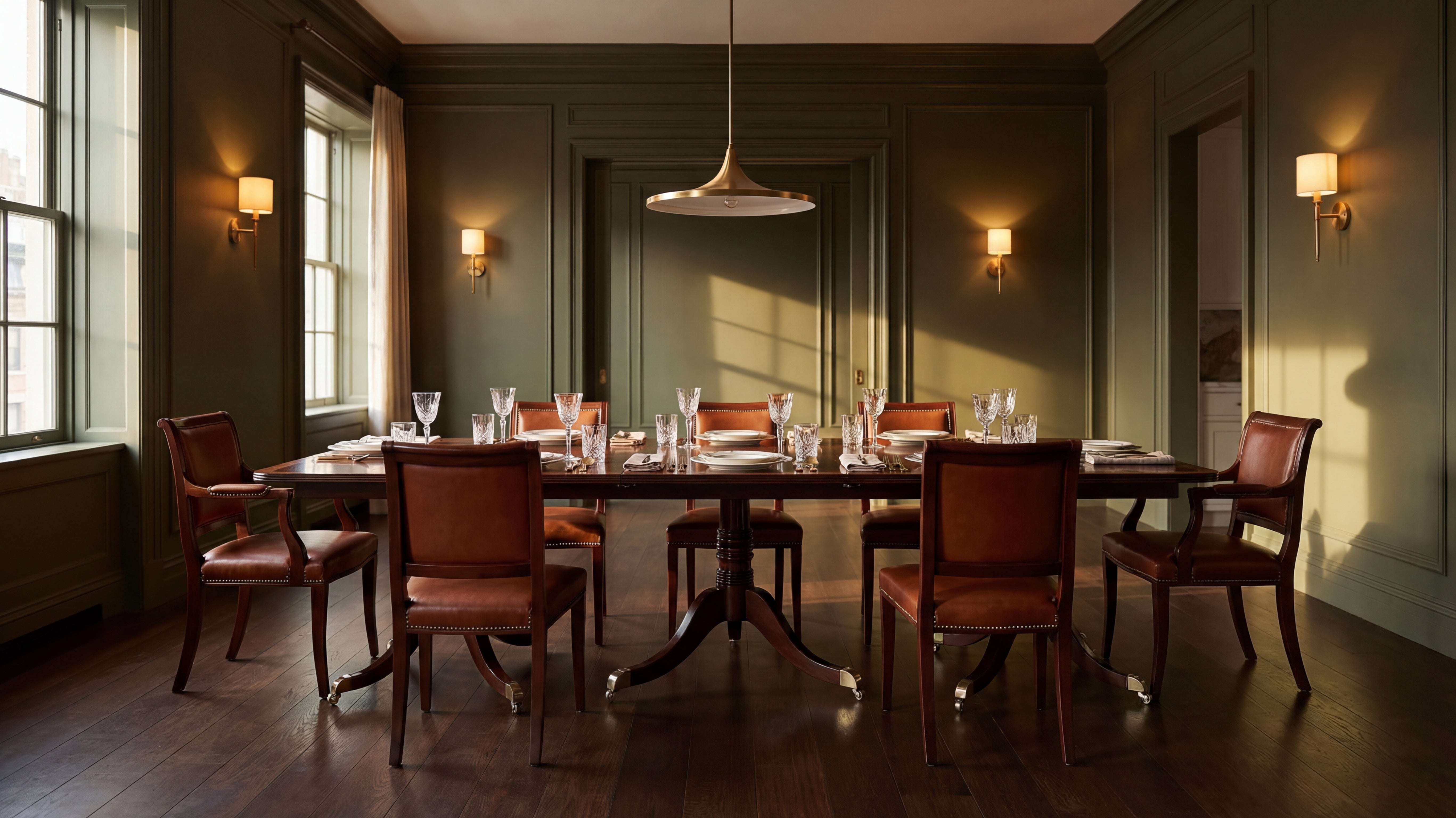
Let the floor work with the furniture, not against it. Dark hardwood floors with dark mahogany furniture create a cohesive, enveloping room that reads well when the walls are kept light or the ceiling is high. If you have pale flooring, dark furniture still works, it just creates a different kind of contrast. Either approach is intentional. The problem is when the floor, the walls, and the furniture are all competing dark tones with no breath between them. Use upholstery to create warmth and lift. An English roll arm sofa in deep forest green velvet next to a mahogany side table is not a heavy room. The velvet carries the light. The green reads as a living tone rather than a dark mass. This is the pairing the Spruce piece was describing: a traditional silhouette in a rich fabric on a frame with exposed dark wood legs. The combination is warmer than a room full of pale linen and white oak. Keep the lighting modern. This is the most reliably useful advice I can give about dark wood rooms. A clean-lined brass floor lamp. A simple pendant in a brushed metal finish. A table lamp with a fabric shade and a slender neck. The lighting should be doing current, unfussy work. If the light fixtures are as traditional as the furniture, the room tips into period reconstruction. If the lighting is modern in form but warm in temperature, the dark wood reads as a timeless choice rather than a historical one. Match wood tones across pieces. A mahogany coffee table, mahogany legs on the sofa, a mahogany side table. When the wood tones are consistent, the room has coherence. When they're scattered, each piece fights for attention. You don't need every piece to be the same finish, but they should feel like they belong to the same family. This is also the argument for custom made-to-order furniture when you're building a room seriously: you can spec the finish to match pieces you already own. Resist overcrowding. Dark wood furniture carries visual weight by definition. Fewer pieces, better chosen, reads more intentional than a room packed with traditional forms. A sofa, two chairs, a coffee table, a side table or two. That's often enough. The room should feel inhabited, not furnished.
The Living Room Pieces That Do the Most Work
If you're adding dark wood to a living room that doesn't currently have it, the entry points that shift the feel of a room most efficiently are:
Side and end tables. A pair of mahogany side tables flanking a sofa or two chairs establishes the wood tone anchor without requiring a major investment. They're also the easiest pieces to live with because they're functional without demanding attention. Coffee table. A solid mahogany coffee table in the center of a seating arrangement grounds the entire grouping. The proportions matter, it should be roughly two-thirds the length of the sofa and placed close enough to reach comfortably from the seating. A well-made mahogany coffee table also invites the kind of use that shows off the wood: books, trays, a candle, objects that have some weight to them. Sofa frame. The English roll arm sofa and the Chesterfield are the two traditional forms most relevant to the 2026 direction. Both can be built with exposed mahogany legs that connect the sofa to the room's wood story without requiring the entire piece to be wood. Bookcases or case goods. A pair of mahogany bookcases flanking a fireplace or television cabinet transforms a living room's architecture in a way that no other single category of furniture can. See the case for them in the home library and office guide.
The Room Beneath the Room: Floors and the Dark Wood Question
It's worth addressing the floor question directly, because it comes up every time.
Dark wood furniture does not require dark floors. But when both are present, the effect is specific and worth understanding. A dark hardwood floor with dark mahogany furniture creates a room that feels deeply grounded, almost sheltered. It works best with high ceilings and strong natural light. It's the kind of room that feels genuinely different from every other room in the house.
If your floors are lighter, a pale oak or a stained concrete or a mid-tone walnut, dark furniture still works. The contrast between the pale floor and the dark mahogany pieces actually highlights the furniture in a way that darker floors don't. The pieces stand out more individually rather than merging into a unified whole.
What doesn't work as well is mixing very warm dark mahogany furniture with floors that have a strong grey or cool undertone. The color temperatures pull in different directions and the room never quite settles. If you're committing to mahogany, warm floors, whether light or dark, are the right pairing.
Why the Quiet Luxury Movement Accelerated This
It's not a coincidence that dark wood furniture's return is happening alongside the quiet luxury conversation.
The quiet luxury move in interiors is, at its core, about substance over signal. No logos, no conspicuous badges of taste. Instead: material quality you can feel, construction that shows its work, pieces that look correct without announcing why. Traditional furniture has always operated this way.
Dark mahogany sits right at the center of that story. A hand-carved mahogany side table with a carved apron and turned legs doesn't need a brand label. The quality is in the material and the making. It will look the same in thirty years. It will look better in fifty. That's the investment case for dark wood that quiet luxury buyers understand intuitively, because they've already made the same calculation in other categories.
The pairing of traditional silhouettes with genuine material quality is exactly what designers are describing when they point to 2026's direction. The forms have been validated over centuries. The materials have been validated by time. The only thing that needed updating was confidence.
What to Avoid
A few things that consistently tip dark wood rooms in the wrong direction:
Heavy window treatments that block the light. Dark wood rooms need light more than lighter rooms do. If the windows are covered with thick drapes that stay closed, the room will feel oppressive rather than enveloping. Simple curtains that can be pulled fully open matter. Too many competing dark tones. If the floor is very dark, the walls are a deep color, and the furniture is dark mahogany, the room has nowhere to breathe. Keep at least one major surface, floor, wall, or ceiling, in a tone that provides contrast. Period-piece lighting. A Victorian chandelier in a room with mahogany furniture and Chippendale chairs doesn't look historical. It looks like a set. Modern-in-form, warm-in-temperature is the right combination. Matching furniture suites. A complete matching mahogany living room set from a single catalog reads differently than a room built piece by piece with intention. The former looks like it arrived in a truck together. The latter looks like a room that someone has lived in and thought about.
Building the Room Properly
The rooms that do this right all share a few things: they commit to the dark wood rather than hedging, they use upholstery and light to create contrast, and they don't overdo it with period detail. One strong mahogany piece in a room reads like a choice. Three or four, well considered, read like a point of view.
That's the standard worth aiming for. Not a room that looks like it came out of a 1985 decorator showhouse. A room that looks like someone with genuine taste made a series of considered decisions over time, and those decisions happened to include some extraordinary dark wood furniture.
If you're building that room and want to talk through the pieces, we're here for it.
Shop the Look: Dark Wood Furniture for the Living Room
- Browse the Living Room Collection
- Shop All Sofas
- Explore the Dining Room Collection
- Get in Touch with a Furniture Consultant
Quick Takeaways
- Multiple major design publications confirm dark wood furniture as a dominant 2026 direction. This is a material and form correction, not a microtrend.
- Mahogany is the primary dark wood worth knowing for traditional living rooms. Walnut reads slightly more contemporary. Stained pieces are a different category.
- The key to a dark wood room that doesn't feel heavy: keep the lighting modern and warm, use rich upholstery colors to create contrast, and let at least one major surface provide breath.
- English roll arm sofas and Chesterfields with exposed mahogany legs are the most relevant seating forms for 2026. Both pair naturally with dark wood tables and case goods.
- Quiet luxury buyers are driving this return. The appeal is the same: material substance, long-term investment value, quality that doesn't need a logo to announce itself.